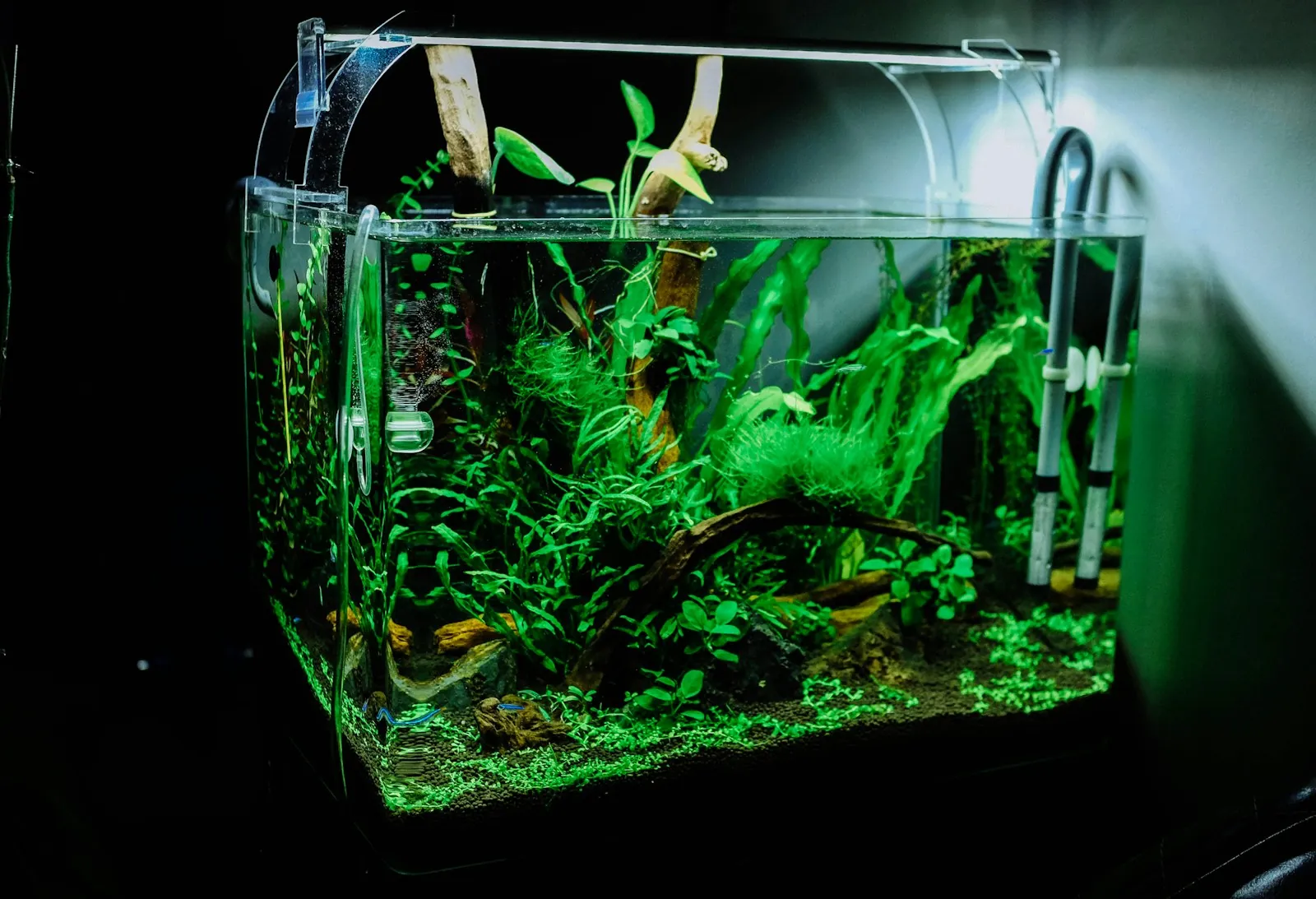
How to Set Up CO2 Injection for Planted Tanks
By AquaFrond . 11 min read . Updated June 2026
CO2 injection transforms a slow, algae-prone planted tank into a lush, fast-growing aquascape. But a pressurized system has enough moving parts that first-time setups often produce more confusion than CO2. This guide walks through every step from choosing between a single-stage and dual-stage regulator to dialing your bubble count without gassing your fish. The core equipment you need is a regulator like the CO2Art Pro-SE Dual Stage CO2 Regulator, a diffuser like the Aquario Neo CO2 Diffuser (Standard) or the UNS Pro Inline CO2 Diffuser for a cleaner look, and a CO2Art Drop Checker with 4dKH Solution to monitor dissolved CO2 levels. A complete starter kit like the FZONE Aquarium CO2 Regulator Complete Kit covers the essentials in one box if you want to keep the purchase simple.
Quick answer
Set up pressurized CO2 by connecting a dual-stage regulator to a CO2 cylinder, plumbing a diffuser to the output tubing, and running the solenoid on a timer that switches the gas on one hour before lights and off one hour before lights out. Start at one bubble per second and adjust based on a drop checker reading.
This guide contains affiliate links. AquaFrond may earn a commission at no cost to you.
Choosing a regulator: single-stage versus dual-stage
The regulator is the heart of the system. It steps high-pressure cylinder CO2 down to a working pressure you can control through the needle valve. The most important feature to understand is the difference between a single-stage and dual-stage design.
A single-stage regulator reduces pressure in one step. As the cylinder empties and pressure drops over weeks, the output pressure can drift upward unexpectedly, causing end-of-tank dump: a rapid flood of CO2 into your aquarium that can crash pH and kill fish overnight. This risk is real and well-documented in planted tank forums.
A dual-stage regulator like the CO2Art Pro-SE Dual Stage CO2 Regulator adds a second pressure reduction stage that stabilizes output regardless of cylinder pressure. When the cylinder is nearly empty the output stays consistent. For any tank with fish or shrimp, a dual-stage is the safer choice. The price difference is real but the insurance value is higher. If budget forces a single-stage choice, monitor the bubble count daily as the cylinder approaches empty and disconnect the system before the cylinder hits zero.

CO2Art Pro-SE Dual Stage CO2 Regulator
The planted tank community's benchmark dual-stage regulator with integrated solenoid, precision needle valve, and bubble counter, preventing end-of-tank dump across the cylinder's lifespan.
$150-$180 mid

FZONE Aquarium CO2 Regulator Complete Kit
All-in-one CO2 starter kit pairing a compact regulator with diffuser, tubing, check valve, and bubble counter for hobbyists building their first pressurized CO2 system.
$90-$110 mid
Choosing a diffuser: ceramic disc or inline
The diffuser takes the CO2 output from your tubing and dissolves it into the water column as fine microbubbles. Two main types serve planted tanks: in-tank ceramic disc diffusers and inline diffusers plumbed into the canister filter return hose.
Ceramic disc diffusers like the Aquario Neo CO2 Diffuser (Standard) mount on the inside back glass with a suction cup. They produce an ultra-fine mist of microbubbles and are visible in the tank. They work for nano through mid-size tanks and do not require a canister filter. The ceramic disc needs occasional regeneration by soaking in a diluted bleach solution when output volume drops.
Inline diffusers like the UNS Pro Inline CO2 Diffuser attach between the canister filter return hose and the tank fitting. The entire water volume passes through the diffusion chamber, making them highly efficient. Nothing is visible inside the tank. If you run a canister filter and want a clean aquascape interior, the inline diffuser is the better solution.

Aquario Neo CO2 Diffuser (Standard)
Acrylic ceramic-disc diffuser producing ultra-fine CO2 mist for efficient dissolution, a favorite in the aquascaping community for its consistent microbubble output.
$20-$35 budget
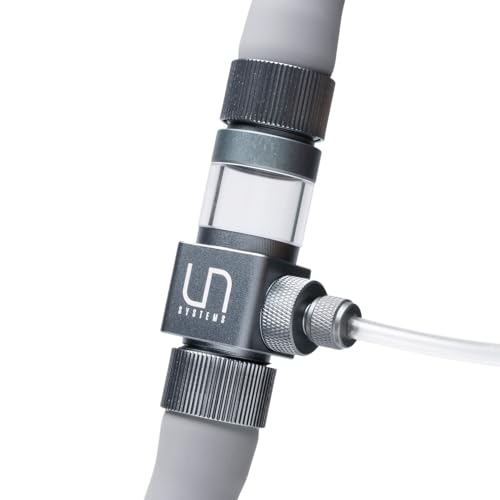
UNS Pro Inline CO2 Diffuser
Inline diffuser plumbed directly into the canister filter return hose for invisible CO2 delivery and maximum dissolution efficiency, no visible equipment inside the tank.
$30-$50 budget
Wiring the solenoid to a timer
The solenoid on a quality regulator like the CO2Art Pro-SE Dual Stage CO2 Regulator is a 12V valve that opens and closes the CO2 flow electronically. Connect it to a simple plug-in outlet timer so CO2 switches on automatically with the light cycle.
The standard schedule is to start CO2 one hour before the lights come on so dissolved CO2 levels are adequate when photosynthesis begins, and to stop CO2 one hour before the lights go out. During the dark period, plants consume oxygen rather than producing it, and CO2 without active photosynthesis can depress pH below safe levels overnight.
Set the bubble count before connecting the timer. With the solenoid open, use the needle valve to dial the output to approximately one bubble per second through the bubble counter on the regulator. This is a starting point, not a precise target. You will adjust it based on what your CO2Art Drop Checker with 4dKH Solution tells you.
Reading the drop checker to dial in CO2
A drop checker like the CO2Art Drop Checker with 4dKH Solution is a glass device filled with 4dKH reference solution and a bromothymol blue pH indicator. It hangs inside the tank and shifts color as dissolved CO2 changes the pH of the sealed solution inside.
Yellow means too much CO2. Green means the CO2 level is in the ideal range, roughly 20 to 30 ppm. Blue means too little CO2. Adjust your bubble count up or down in small increments and wait two to three hours between adjustments, since the drop checker lags actual CO2 by that amount as the indicator solution equilibrates.
If your fish show stress signs like rapid gilling or gasping at the surface, this indicates CO2 overdose. Stop the gas and increase surface agitation immediately. This is why you start conservative at one bubble per second and increase slowly.

CO2Art Drop Checker with 4dKH Solution
Glass drop checker with pre-mixed 4 degree KH reference solution providing continuous visual CO2 concentration feedback via a bromothymol blue indicator.
$12-$20 budget
Filter choice and CO2 retention
CO2 retention is directly affected by how much your filter disturbs the water surface. A canister filter like the Oase BioMaster Thermo 250 Canister Filter or EHEIM Classic 250 Canister Filter returns water via a submerged spray bar or lily pipe aimed horizontally, preserving dissolved CO2. A hang-on-back filter that creates a waterfall return will degas much of the CO2 you are injecting, making the system far less efficient.
If you run a canister filter, aim the return output horizontally along the back glass at mid-depth to circulate water without breaking the surface. For planted tanks under fifteen gallons that use a sponge filter or nano HOB, use the Aquario Neo CO2 Diffuser (Standard) and accept some CO2 loss from surface movement.
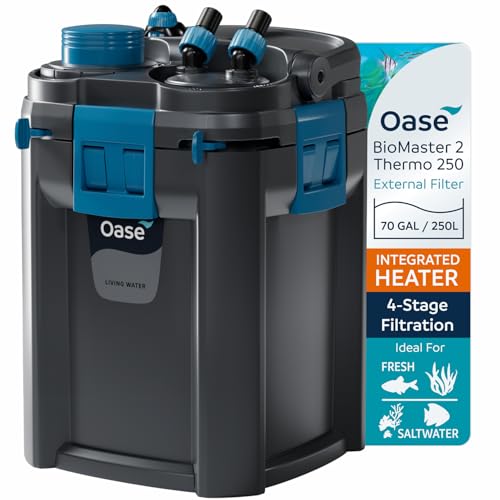
Oase BioMaster Thermo 250 Canister Filter
German-engineered canister filter with an integrated heater, a pre-filter chamber that opens without shutting down the main canister, and low surface-agitation output ideal for CO2-injected planted tanks.
$200-$280 premium

EHEIM Classic 250 Canister Filter
German no-frills canister filter known for near-silent operation and decades-long reliability, a favorite in the planted tank hobby for its proven performance and media flexibility.
$90-$130 mid
Featured in this guide
CO2Art Pro-SE Dual Stage CO2 Regulator
The planted tank community's benchmark dual-stage regulator with integrated solenoid, precision needle valve, and bubble counter, preventing end-of-tank dump across the cylinder's lifespan.
$150-$180 mid
FZONE Aquarium CO2 Regulator Complete Kit
All-in-one CO2 starter kit pairing a compact regulator with diffuser, tubing, check valve, and bubble counter for hobbyists building their first pressurized CO2 system.
$90-$110 mid
Aquario Neo CO2 Diffuser (Standard)
Acrylic ceramic-disc diffuser producing ultra-fine CO2 mist for efficient dissolution, a favorite in the aquascaping community for its consistent microbubble output.
$20-$35 budget
UNS Pro Inline CO2 Diffuser
Inline diffuser plumbed directly into the canister filter return hose for invisible CO2 delivery and maximum dissolution efficiency, no visible equipment inside the tank.
$30-$50 budget
CO2Art Drop Checker with 4dKH Solution
Glass drop checker with pre-mixed 4 degree KH reference solution providing continuous visual CO2 concentration feedback via a bromothymol blue indicator.
$12-$20 budget
Oase BioMaster Thermo 250 Canister Filter
German-engineered canister filter with an integrated heater, a pre-filter chamber that opens without shutting down the main canister, and low surface-agitation output ideal for CO2-injected planted tanks.
$200-$280 premium
FAQ
Frequently asked questions
How long does a CO2 cylinder last in a planted tank?+
Cylinder lifespan depends on tank size and bubble count. A small 24oz paintball cylinder at one bubble per second on a ten-hour photoperiod typically lasts six to ten weeks on a nano tank. A standard 5-pound aluminum cylinder can last four to twelve months on a mid-size tank at moderate injection rates.
Can I use paintball CO2 cylinders with a planted tank regulator?+
Yes, as long as the regulator includes a paintball adapter or is sold with one. Many hobbyists prefer paintball cylinders for nano and small tanks because they are inexpensive, easy to refill or swap at sporting goods stores, and available everywhere. Confirm the regulator connection type before purchasing.