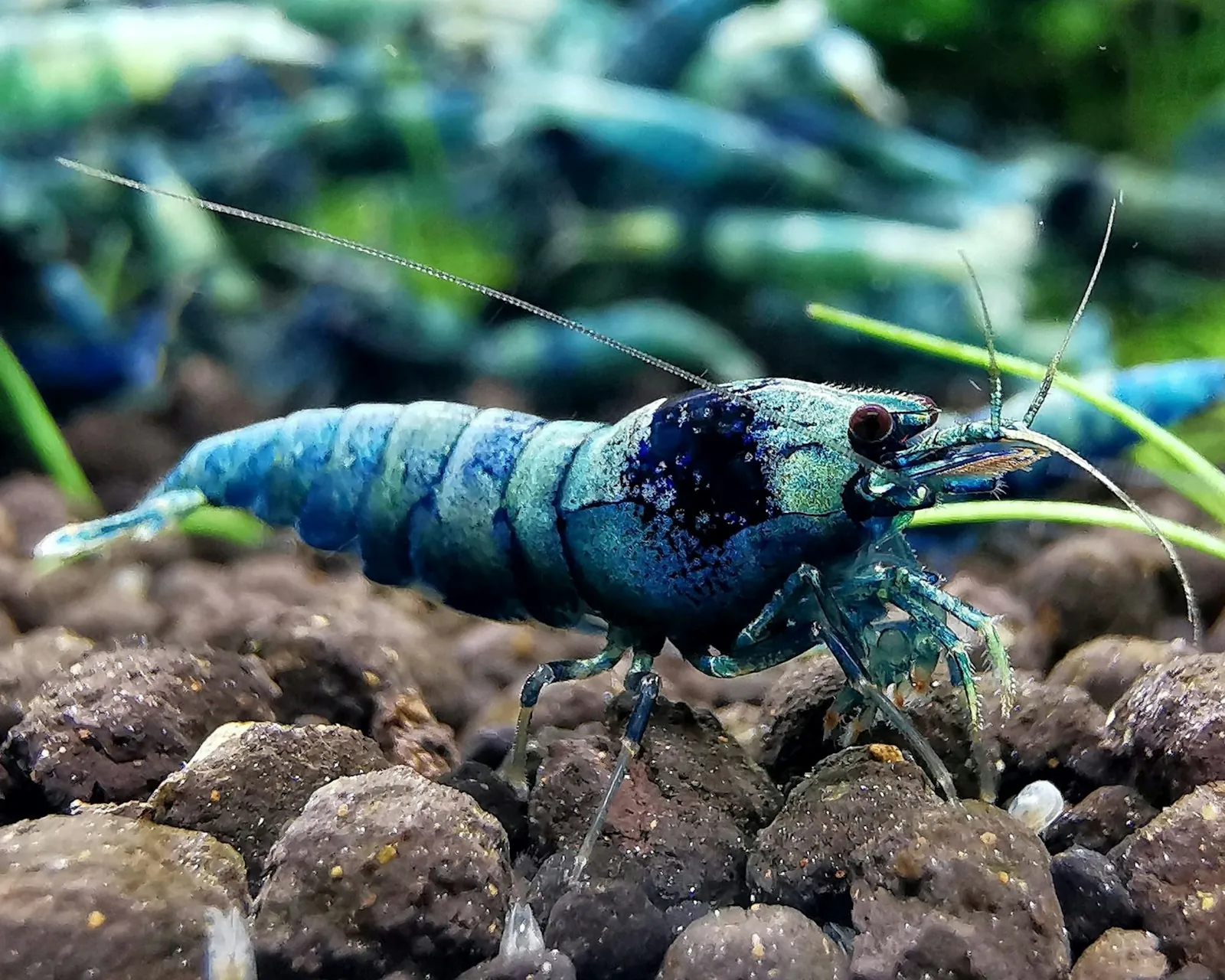
Neocaridina Cherry Shrimp Tank Setup Guide
By AquaFrond . 12 min read . Updated June 2026
Neocaridina shrimp, the group that includes cherry shrimp, blue dream, snowball, and dozens of color variants, are the most beginner-accessible dwarf shrimp in the hobby. They are forgiving of parameter fluctuation, breed readily in most planted tanks, and add constant activity and color to a scape. The short supply list: Aquarium Co-Op Coarse Sponge Filter, Fluval Plant and Shrimp Stratum (4.4 lb) or CaribSea Eco-Complete Planted Substrate (20 lb), Seachem Prime Freshwater Conditioner, and Dennerle Shrimp King Complete Shrimp Food for daily feeding. If your tap water is soft, you will also need Salty Shrimp Mineral GH+ (Neocaridina) to remineralize to neocaridina parameters.
Quick answer
Set up a neocaridina cherry shrimp tank with an active or inert substrate, a sponge filter for safe filtration, moderate lighting for live plants, dechlorinated tap water in the correct GH and KH range, and a copper-free fertilizer routine. Cycle the tank before adding shrimp, feed once daily with a quality staple food, and keep water changes small and frequent.
This guide contains affiliate links. AquaFrond may earn a commission at no cost to you.
Tank size and filtration for neocaridina shrimp
A five to ten gallon tank is the sweet spot for a neocaridina colony. Small enough to maintain easily, large enough to hold a stable colony of 20 to 50 shrimp. Larger tanks are fine but less practical if you want a dedicated shrimp aquascape.
Filtration must be shrimp-safe. Any powered filter with an open intake can suck in baby shrimp, called shrimplets. A sponge filter like the Aquarium Co-Op Coarse Sponge Filter powered by a small air pump is the standard recommendation. The foam surface traps particles, provides biological filtration, and offers no risk to shrimp of any size.
If you must use a canister filter or HOB in a shrimp tank, cover every intake with a fine pre-filter sponge sleeve to prevent shrimp from being pulled in.

Aquarium Co-Op Coarse Sponge Filter
Double-sided coarse sponge filter designed for shrimp tanks and planted nano aquariums, providing safe biological filtration with zero risk to baby shrimp and gentle water movement.
$8-$18 budget
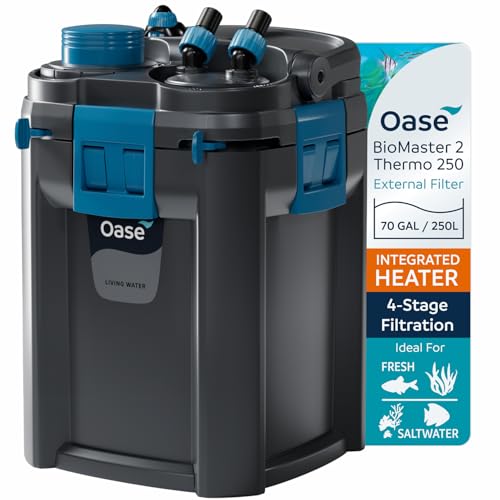
Oase BioMaster Thermo 250 Canister Filter
German-engineered canister filter with an integrated heater, a pre-filter chamber that opens without shutting down the main canister, and low surface-agitation output ideal for CO2-injected planted tanks.
$200-$280 premium
Substrate for a neocaridina planted tank
Neocaridina shrimp are flexible about substrate chemistry compared to caridina species. They do well on inert sand and gravel, active soils, and everything in between, as long as pH stays between 6.8 and 7.8 and GH between 6 and 8.
Fluval Plant and Shrimp Stratum (4.4 lb) is the most popular active soil choice for neocaridina tanks. It buffers pH into the slightly acidic range the shrimp prefer and provides root support for planted tank plants.
CaribSea Eco-Complete Planted Substrate (20 lb) is the safest substrate for owners who do not want any pH buffering and plan to manage water chemistry through the water source and minerals. It releases no ammonia spike.
Add Dragon Stone (Ohko Stone) Aquascape Rock or Spider Wood (Azalea Root) Driftwood to the scape. Both are safe for shrimp. Dragon stone does not affect water chemistry. Spider wood leaches mild tannins that can benefit shrimp health.
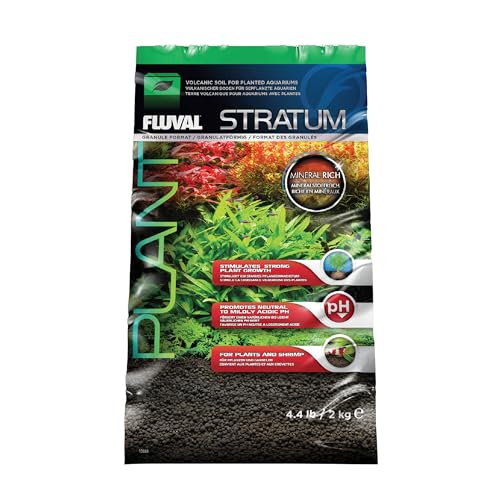
Fluval Plant and Shrimp Stratum (4.4 lb)
Volcanic mineral substrate that buffers pH into the slightly acidic range with a gentler ammonia spike than ADA Amazonia, making it the beginner-friendly active soil for planted and shrimp tanks.
$20-$35 budget

CaribSea Eco-Complete Planted Substrate (20 lb)
Iron-rich basaltic volcanic substrate containing live beneficial bacteria, supporting plant root growth and biological filtration without the ammonia spike of active soils.
$25-$40 budget

Dragon Stone (Ohko Stone) Aquascape Rock
Lightweight honeycomb-textured stone that is chemically inert and safe for soft-water shrimp tanks, with a natural pitted surface that mosses and small plants attach to readily.
$15-$40 budget

Spider Wood (Azalea Root) Driftwood
Branchy, web-like driftwood with a distinctive spider-web silhouette popular in planted aquascapes, leaches gentle tannins and provides natural surfaces for mosses and anubias.
$10-$35 budget
Water chemistry for neocaridina shrimp
Verify your tap water parameters before building your shrimp tank. Neocaridina shrimp need GH between 6 and 8, KH between 2 and 5, pH between 6.8 and 7.8, and TDS between 150 and 250 ppm. Use an API GH and KH Aquarium Test Kit to measure GH and KH.
If your tap water falls within these ranges, treat it with Seachem Prime Freshwater Conditioner to neutralize chlorine and chloramine and use it directly. If your tap water is very soft or uses RO filtration, remineralize with Salty Shrimp Mineral GH+ (Neocaridina).
Always dechlorinate water before adding it to a shrimp tank. Even a small chlorine exposure from undosed tap water can cause mass shrimp deaths.

Seachem Prime Freshwater Conditioner
The most recommended water conditioner in freshwater aquatics, dechlorinating tap water and detoxifying ammonia and nitrite without adding copper, making it safe for shrimp and invertebrates.
$8-$20 budget

Salty Shrimp Mineral GH+ (Neocaridina)
German-formulated GH mineral salt for remineralizing RO water to the ideal parameters for neocaridina shrimp, providing calcium, magnesium, potassium, and sodium without raising KH.
$15-$28 mid

API GH and KH Aquarium Test Kit
Drop-based GH and KH test kit for measuring the water hardness parameters critical to shrimp health, providing fast, accurate readings to verify remineralization targets.
$10-$18 budget
Feeding neocaridina shrimp
Neocaridina shrimp in a planted tank graze constantly on biofilm, algae, and plant debris. In a well-established tank with good biofilm growth, supplemental feeding can be minimal. For new colonies or breeding programs, supplement with a quality staple food once daily.
Dennerle Shrimp King Complete Shrimp Food is the most widely trusted daily staple across the hobby. The pellets sink, shrimp mob them enthusiastically, and the balanced protein, plant matter, and mineral content supports healthy molting and coloration.
For breeding colonies where shrimplet survival matters, GlasGarten Shrimp Dinner Artemia (Baby Shrimp Food) provides fine-particle artemia and spirulina food that newborn shrimplets can immediately consume.
Never add any product containing copper to a shrimp tank. APT Complete All-in-One Planted Tank Fertilizer and Seachem Flourish Comprehensive Supplement are both copper-free and safe for neocaridina shrimp.

Dennerle Shrimp King Complete Shrimp Food
The most trusted daily shrimp staple food in the hobby, balancing protein, plant-based fiber, and natural minerals to support healthy molting, coloration, and breeding in all freshwater shrimp.
$12-$22 mid

GlasGarten Shrimp Dinner Artemia (Baby Shrimp Food)
Fine-particle shrimp food formulated for baby shrimp and juveniles, with artemia and spirulina particles small enough for shrimplets to consume immediately after birth.
$10-$18 budget

APT Complete All-in-One Planted Tank Fertilizer
All-in-one liquid fertilizer formulated by the 2Hr Aquarist covering macros and micros in a single dose, designed for low-dose daily use in planted aquariums with or without CO2.
$22-$35 mid
Featured in this guide
Aquarium Co-Op Coarse Sponge Filter
Double-sided coarse sponge filter designed for shrimp tanks and planted nano aquariums, providing safe biological filtration with zero risk to baby shrimp and gentle water movement.
$8-$18 budget
Fluval Plant and Shrimp Stratum (4.4 lb)
Volcanic mineral substrate that buffers pH into the slightly acidic range with a gentler ammonia spike than ADA Amazonia, making it the beginner-friendly active soil for planted and shrimp tanks.
$20-$35 budget
Seachem Prime Freshwater Conditioner
The most recommended water conditioner in freshwater aquatics, dechlorinating tap water and detoxifying ammonia and nitrite without adding copper, making it safe for shrimp and invertebrates.
$8-$20 budget
Salty Shrimp Mineral GH+ (Neocaridina)
German-formulated GH mineral salt for remineralizing RO water to the ideal parameters for neocaridina shrimp, providing calcium, magnesium, potassium, and sodium without raising KH.
$15-$28 mid
Dennerle Shrimp King Complete Shrimp Food
The most trusted daily shrimp staple food in the hobby, balancing protein, plant-based fiber, and natural minerals to support healthy molting, coloration, and breeding in all freshwater shrimp.
$12-$22 mid
GlasGarten Shrimp Dinner Artemia (Baby Shrimp Food)
Fine-particle shrimp food formulated for baby shrimp and juveniles, with artemia and spirulina particles small enough for shrimplets to consume immediately after birth.
$10-$18 budget
API GH and KH Aquarium Test Kit
Drop-based GH and KH test kit for measuring the water hardness parameters critical to shrimp health, providing fast, accurate readings to verify remineralization targets.
$10-$18 budget
Dragon Stone (Ohko Stone) Aquascape Rock
Lightweight honeycomb-textured stone that is chemically inert and safe for soft-water shrimp tanks, with a natural pitted surface that mosses and small plants attach to readily.
$15-$40 budget
FAQ
Frequently asked questions
How long does it take to cycle a shrimp tank?+
Full nitrogen cycle establishment typically takes four to six weeks with an active substrate like Fluval Stratum, or three to four weeks with an established media seed from another tank. Test for zero ammonia and zero nitrite before adding shrimp. Rushing this step is the most common cause of new shrimp keeper failures.
Why are my cherry shrimp dying after a water change?+
The most common causes are chlorine shock from undosed tap water, a large temperature difference between the new water and the tank, and parameter shock from a sudden GH or KH shift. Always dechlorinate with Seachem Prime, match the water temperature before adding, and keep water changes small, fifteen to twenty percent weekly rather than large infrequent changes.