Best Substrate and Hardscape for Planted Tanks
Substrate is the foundation of every planted aquarium. Active soils like ADA Amazonia buffer pH into the slightly acidic range that most tropical plants and shrimp prefer and release nutrients directly to roots. Inert sands and gravels are beginner-friendly and long-lasting but require more fertilizer supplementation. Hardscape, the stones and driftwood that give an aquascape its structure, changes water chemistry too: Seiryu stone raises pH and hardness, dragon stone is relatively inert, and driftwood releases tannins that soften water. Getting the combination right for your plants and inhabitants is the first design decision.
AquaFrond may earn a commission from links below . Updated June 2026
What is the best Substrate and Hardscape for Planted Tanks?
ADA Aqua Soil Amazonia is the gold standard active substrate for high-tech planted tanks and competitive aquascaping, buffering pH to the 6.0 to 7.0 range plants love and releasing nutrients directly to roots. For beginners or shrimp tanks where a steep ammonia spike is a concern, Fluval Stratum is the safer active soil choice with a gentler break-in period and reliable pH buffering without the New Tank Syndrome risk of ADA.

ADA Aqua Soil Amazonia (9L)
$35-$55 mid
The world benchmark active substrate for planted aquariums, buffering pH to the slightly acidic range and delivering nutrients directly to plant roots for maximum plant growth and red coloration.
- Buffers pH to the 6.0 to 7.0 range ideal for most tropical plants and caridina shrimp
- Releases nutrients directly to roots, reducing fertilizer dependence in the first year
- The competition aquascaping standard; used in virtually every award-winning Nature Aquarium scape
Fresh soil releases a significant ammonia spike requiring a 4 to 6 week fishless cycle before adding inhabitants
Verdict The gold standard active substrate; the first choice for high-tech scapes and caridina tanks.

Dragon Stone (Ohko Stone) Aquascape Rock
$15-$40 budget
Lightweight honeycomb-textured stone that is chemically inert and safe for soft-water shrimp tanks, with a natural pitted surface that mosses and small plants attach to readily.
- Chemically inert; does not affect pH or hardness, safe for caridina shrimp
- Lightweight with dramatic pitted, cavernous texture
- Mosses, java fern, and anubias attach naturally to the pitted surface
Very lightweight; can tip or shift in aquariums with active fish or strong flow
Verdict The safest aquascape stone for shrimp tanks; inert, lightweight, and naturally beautiful.
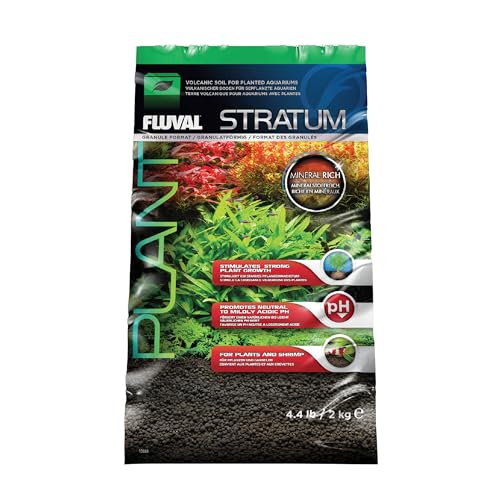
Fluval Plant and Shrimp Stratum (4.4 lb)
$20-$35 budget
Volcanic mineral substrate that buffers pH into the slightly acidic range with a gentler ammonia spike than ADA Amazonia, making it the beginner-friendly active soil for planted and shrimp tanks.
- Active soil that buffers pH without the severe ammonia spike of ADA Amazonia
- Supports plant root development and beneficial bacterial colonies
- Widely available at big-box pet stores and Amazon for easy restock
Lighter than ADA Amazonia; granules can be disturbed by aggressive digging fish
Verdict The safest active substrate for beginners: effective pH buffering with a forgiving break-in.

Seiryu Stone (Mountain Stone) Aquascape Rock
$45-$55 mid
The iconic grey-blue carbonate rock of Japanese Nature Aquarium aquascaping, with dramatic natural textures ideal for Iwagumi-style layouts, sold by weight.
- Dramatic layered grey texture is the defining look of the Iwagumi aquascape style
- Shapes vary naturally; each piece is unique
- Sinks and is stable without anchoring in most setups
Carbonate-based; continuously raises pH and GH as it slowly dissolves. Incompatible with caridina shrimp tanks without careful water management
Verdict The definitive Iwagumi stone; beautiful but know that it will raise your water hardness.

CaribSea Eco-Complete Planted Substrate (20 lb)
$25-$40 budget
Iron-rich basaltic volcanic substrate containing live beneficial bacteria, supporting plant root growth and biological filtration without the ammonia spike of active soils.
- No ammonia spike; safe to add fish and shrimp immediately after setup
- Iron-rich basalt composition supports root-feeding plants
- Includes live beneficial bacteria to seed the biological filter
Does not buffer pH; requires supplemental fertilization from setup day one
Verdict The no-spike planted substrate for hobbyists who cannot wait through a cycling period.

Spider Wood (Azalea Root) Driftwood
$10-$35 budget
Branchy, web-like driftwood with a distinctive spider-web silhouette popular in planted aquascapes, leaches gentle tannins and provides natural surfaces for mosses and anubias.
- Distinctive branching structure creates natural mid-ground and canopy aquascape elements
- Tannins are mild and fade over weeks with water changes
- Surfaces colonize quickly with biofilm that shrimp graze
May float for 1 to 3 weeks before fully waterlogging; pre-soak before use
Verdict The most popular branchy driftwood for natural-style planted aquascapes.
The method
How we chose
We evaluated each option on fit, build quality, daily usability, and value. Our top pick, ADA Aqua Soil Amazonia (9L), earned the spot. The gold standard active substrate; the first choice for high-tech scapes and caridina tanks. The comparison above highlights exactly who each pick is best for.
Related guides
Head-to-head comparisons
FAQ
Best Substrate and Hardscape for Planted Tanks: FAQ
How deep should the substrate be in a planted aquarium?+
Most stem plants and root feeders want at least two to three inches of substrate for root anchoring and nutrition. Foreground carpet plants need at least two inches, ideally slightly more, so roots establish before they start sending runners. A sloped substrate, deeper at the back and shallower at the front, is the standard aquascape technique for depth perspective.
Does ADA Amazonia cause an ammonia spike?+
Yes, fresh ADA Amazonia releases a significant ammonia spike for the first four to six weeks. This is normal and part of the nitrogen cycling process, but it means you should not add fish or shrimp immediately after setup. Run the tank lights on a reduced schedule, do frequent water changes during the cycling period, and test ammonia before adding any inhabitants. Fluval Stratum and Mr. Aqua soils have a milder spike.
Does Seiryu stone raise pH and hardness?+
Yes. Seiryu stone, also sold as mountain stone, is carbonate-based and will continuously raise pH and general hardness as it slowly dissolves. In a soft-water setup for caridina shrimp, this is a problem and Seiryu is best avoided. Dragon stone and lava rock are more chemically inert. If you love the look of Seiryu but need soft acidic water, use resin versions or pair it with a consistent RO water top-off to manage hardness creep.
How do I anchor driftwood in a new aquascape?+
Fresh driftwood floats until it is fully waterlogged, which can take days to weeks depending on density. Soak it in a bucket of water in advance, changing the water daily to leach tannins if you want clearer water faster. In the tank, anchor it under a heavy stone or use stainless steel screws to attach it to a slate base hidden under the substrate. Cholla and spider wood waterlog faster than dense mopani.
Can I mix active soil and inert sand in the same aquarium?+
Yes, and this is a common technique in Nature Aquarium style scapes. The active soil goes in the mid and background where plants root, while fine white sand caps the foreground for an open, bright look. A separator of plastic mesh or root tabs keeps the zones from mixing. The active soil still buffers the whole tank pH since the water column integrates quickly.